
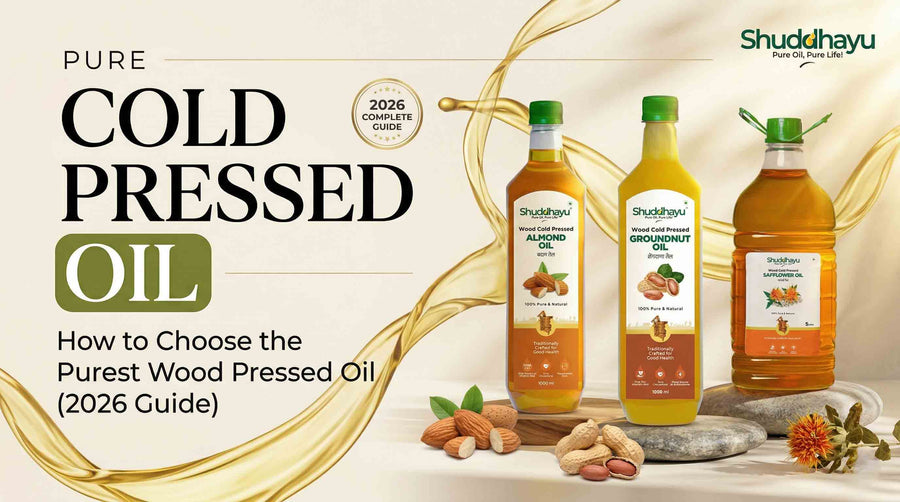
You've probably stood in the supermarket aisle staring at shelves of cooking oils — sunflower oil, refined oil, “heart healthy” oil — wondering which one is actually good for your family.
The truth is that many modern oils are heavily processed, stripped of nutrients, and filled with hidden chemicals.
By the end of this guide, you'll understand what cold pressed oil and wood pressed oil really mean, how to choose the purest oils, and which oils work best for cooking, health, and everyday use.
Browse our full range of Wood Pressed Oils →
Key Takeaways
- Cold pressed oil is extracted without heat or chemicals, preserving natural nutrients and antioxidants.
- Wood pressed oil (Lakdi Ghani oil) uses a traditional wooden churner that keeps temperatures below 45°C.
- Refined oils may lose up to 80% of natural nutrients during processing — Source: Harvard T.H. Chan School of Public Health.
- Oils extracted using wooden ghani retain natural aroma, flavor, and micronutrients.
- Oils like sesame, groundnut, and coconut are among the most stable cold pressed oils for Indian cooking.
- Authentic cold pressed oils have strong aroma, thicker texture, and shorter shelf life compared to refined oils.
What to Look For in Cold Pressed Oil
Cold pressed oil is oil extracted mechanically without heat or chemical refining, preserving its natural nutrients, aroma, and antioxidants.
Wood pressed oils are a subtype of cold pressed oils that use a traditional wooden churner (Lakdi Ghani) to press seeds slowly at low temperatures.
The biggest difference between refined oil and cold pressed oil comes down to processing temperature and chemical treatment.
| What to Look For | Why It Matters | What to Avoid |
|---|---|---|
| Extraction Method | Mechanical pressing preserves nutrients | Chemical solvent extraction |
| Temperature Control | Lower heat protects antioxidants | High heat refining |
| Raw Seed Quality | Organic seeds improve oil purity | Mixed or adulterated seeds |
| Aroma & Color | Natural oils have strong smell and darker color | Odorless or bleached oil |
If you want oils closest to traditional Indian cooking methods, explore wood pressed oils made using Lakdi Ghani extraction.
Why Choosing the Right Cooking Oil Matters
The cooking oil you use daily directly affects your long-term health — including heart health, inflammation levels, and nutrient absorption.
According to the World Health Organization, diets high in industrially processed oils contribute significantly to chronic diseases including obesity and cardiovascular issues — Source: WHO, 2023.
That said, traditional oils like sesame, groundnut, and coconut have been used for centuries in Indian kitchens for good reason.
First, cold pressed oils retain natural antioxidants like Vitamin E and polyphenols.
Second, they contain balanced fatty acids that support metabolism and heart health.
Third, they offer better flavor and nutrient density, which means you often need less oil for cooking.
In practice, this means switching from refined oils to cold pressed oils can improve both nutrition and cooking quality simultaneously.
How to Choose Cold Pressed Oil: 5 Key Factors
1. Extraction Method
The extraction method determines how much nutrition remains in the oil.
Look for wood pressed (Lakdi Ghani) extraction — this slow pressing process ensures minimal heat generation.
For example, Organic Wood Pressed Groundnut Oil is extracted using traditional wooden ghani techniques.
This matters because slow pressing preserves fatty acids and natural aroma compounds.
2. Seed Quality
High-quality oil starts with high-quality seeds.
Look for organic or pesticide-free seeds.
For instance, oils made from premium sunflower seeds like Organic Wood Pressed Sunflower Oil retain more Vitamin E.
According to research, sunflower oil contains up to 41 mg of Vitamin E per 100g — Source: USDA Food Data Central.
3. Smoke Point
| Oil Type | Smoke Point | Best Use |
|---|---|---|
| Groundnut Oil | ~225°C | Frying |
| Sunflower Oil | ~232°C | Cooking |
| Sesame Oil | ~210°C | Tempering |
| Coconut Oil | ~177°C | Baking / cooking |
For example, Wood Pressed Mustard Oil is ideal for Indian cooking styles that require high heat.
4. Nutritional Profile
Different oils provide different health benefits.
Sesame oil contains sesamol antioxidants, which support heart health.
For instance, Wood Pressed White Sesame Oil is commonly used for cooking, oil pulling, and Ayurvedic wellness practices.
Studies show sesame oil may help reduce LDL cholesterol — Source: Journal of Medicinal Food, 2022.
5. Freshness
Cold pressed oils have shorter shelf life because they lack preservatives.
Look for oils that are freshly pressed in small batches.
For example, Virgin Wood Pressed Coconut Oil retains its natural coconut aroma when freshly extracted.
Fresh oil means higher antioxidant levels and better taste.
Common Mistakes to Avoid When Buying Cold Pressed Oil
Mistake #1: Confusing “Cold Pressed” with “Refined”
Many brands label refined oils as cold pressed. The result is nutrient-poor oil with misleading marketing. Always check extraction method.
Mistake #2: Ignoring Seed Quality
Even cold pressed oil made from low-quality seeds can be poor quality. Look for organic or chemical-free seeds.
Mistake #3: Choosing Oil Based Only on Price
Cheap oils often indicate mass production or adulteration. Quality oils require slow extraction and better seeds.
Our Recommended Wood Pressed Oils
High-quality wood pressed oils combine pure seeds, traditional extraction, and small-batch production.
Groundnut Oil
Organic Wood Pressed Groundnut Oil works best for everyday Indian cooking. It offers a high smoke point and nutty flavor.
Coconut Oil
Virgin Wood Pressed Coconut Oil is ideal for cooking, baking, hair care, and oil pulling. Its natural coconut aroma indicates minimal processing.
Sesame Oil
Wood Pressed White Sesame Oil is excellent for Ayurvedic wellness and cooking. It is particularly popular for oil pulling and tempering dishes.
Browse our full Wood Pressed Oils collection to explore pure traditional oils.
Frequently Asked Questions About Cold Pressed Oil
Q: Is cold pressed oil healthier than refined oil?
Yes. Cold pressed oil retains natural nutrients, antioxidants, and fatty acids because it avoids chemical processing.
Q: What is the difference between wood pressed oil and cold pressed oil?
Wood pressed oil is a traditional form of cold pressed oil that uses a wooden churner (Lakdi Ghani) for extraction.
Q: Which cold pressed oil is best for Indian cooking?
Groundnut oil and mustard oil are among the best options because they have high smoke points.
Q: Can cold pressed oil be used for frying?
Yes. Oils like groundnut oil and sunflower oil are suitable for frying due to their high smoke point.
Q: How long does cold pressed oil last?
Most cold pressed oils last 6–12 months when stored in cool, dark conditions.
Q: Is cold pressed oil worth the price?
Yes. The higher cost reflects better seed quality, traditional extraction, and higher nutrient retention.
Now that you know exactly what to look for, the hard part is done.
Browse our Wood Pressed Oils collection — every oil is traditionally extracted using Lakdi Ghani methods.
Shop now and experience the difference of pure oil.
Final Thoughts: Choosing the Right Cold Pressed Oil
Choosing the right cooking oil comes down to purity, extraction method, and seed quality.
Cold pressed oils and wood pressed oils preserve natural nutrients and flavor that refined oils often lose during processing.
Whether you're cooking daily meals, improving your diet, or exploring traditional oils, choosing authentic cold pressed oil can significantly improve both health and cooking quality.
Armed with this guide, you're ready to make a confident choice and avoid the mistakes most buyers make.


