
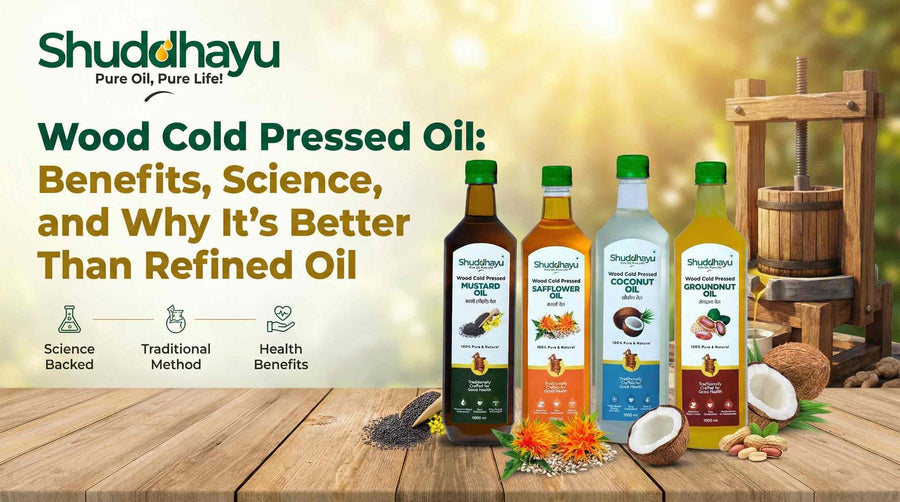
Introduction: The Silent Transformation of Your Plate
In the fast-paced world of 2026, the most radical thing you can do for your health is to slow down. For decades, the modern kitchen has been dominated by "refined" oils—clear, odorless, and chemically processed liquids marketed as heart-healthy and convenient. However, as lifestyle diseases like hypertension, type 2 diabetes, and chronic inflammation reach an all-time high, health-conscious families are looking backward to move forward.
Welcome to the world of Wood Cold Pressed Oils. This is not just a cooking medium; it is a return to biological harmony. By combining the ancient "Ghani" technique with modern quality standards, Shuddhayu Oils is bringing back the "liquid gold" that nourished our ancestors for millennia. To understand why this change is essential, we must dive deep into the science of extraction, the chemistry of fats, and the impact of heat on human biology.
The Physics of Extraction: Why Wood Wins Over Metal
The term "Cold Pressed" has become a popular marketing buzzword, but not all cold-pressing is created equal. Most industrial cold-pressed oils use heavy metal expellers. While they avoid the extreme temperatures of refining, the friction between metal parts can still raise the oil's temperature to 60°C or 70°C.
The Cooling Soul of Wood
At Shuddhayu, we utilize the traditional Vagai (Black Siris) wood for our presses. This choice is not merely aesthetic or traditional; it is rooted in thermodynamics. Wood is a natural insulator and a poor conductor of heat. As the heavy wooden pestle rotates slowly within the wooden mortar, it crushes the seeds with immense pressure.
In a metal expeller, the heat generated by this pressure has nowhere to go but into the oil. In a Shuddhayu wooden ghani, the wood itself absorbs the friction-generated heat. This ensures that the oil never exceeds 40°C. Why is this 40-degree mark so critical? At higher temperatures, the delicate molecular bonds of essential fatty acids begin to vibrate and break. By keeping it cool, we ensure the oil remains "alive" and bio-available.
The "Refined" Deception: What Happens in the Factory?
To appreciate the purity of wood cold pressed oil, one must understand the violent process used to create regular supermarket refined oil. Refined oil is an industrial product, not a natural one.
-
High-Heat Pre-treatment: Seeds are heated to high temperatures to make oil extraction easier.
-
Solvent Extraction: A chemical called Hexane (a byproduct of gasoline refining) is used to dissolve every last drop of oil from the seed pulp.
-
Degumming and Neutralization: The mixture is treated with phosphoric acid and caustic soda to remove "impurities"—which are actually the nutritious fibers and minerals.
-
Bleaching: The oil is filtered through activated clays to strip it of its natural color.
-
Deodorization: Finally, the oil is heated to over 230°C under vacuum to remove the chemical smells introduced during the process.
This process creates a "stable" product with a long shelf life, but it results in an oil that is nutritionally bankrupt and loaded with trans-fats created by high-heat processing. Shuddhayu Wood Cold Pressed Oil skips every single one of these steps. We believe that if an oil needs a chemist to make it edible, it shouldn’t be in your body.
The Nutritional Anatomy: What Stays Inside the Bottle
When you choose Shuddhayu, you are consuming a complex matrix of nutrients that are destroyed in the refining process.
1. Phytosterols: Nature’s Cholesterol Blockers
Wood pressed oils are naturally rich in phytosterols. These plant-derived compounds are structurally similar to cholesterol. When you eat them, they compete with cholesterol for absorption in your digestive tract. This effectively lowers your "bad" LDL cholesterol levels without the need for synthetic intervention.
2. Tocopherols (Natural Vitamin E)
Vitamin E is a potent fat-soluble antioxidant. In refined oils, natural Vitamin E is stripped away and replaced with synthetic BHA or BHT to prevent rancidity. In our wood-pressed oils, the natural tocopherols remain intact. They act as a natural preservative for the oil and, once consumed, act as a shield for your cell membranes against oxidative stress.
3. Polyphenols and Flavonoids
These are the compounds that give wood-pressed oils their distinct aroma and deep color. They are powerful anti-inflammatory agents. Research suggests that the polyphenols in cold-pressed oils can help reduce the risk of neurodegenerative diseases and certain types of cancer by neutralizing free radicals in the bloodstream.
Understanding the Fatty Acid Profile
Not all fats are enemies. Your brain is 60% fat, and every cell membrane in your body requires lipids to function.
-
Monounsaturated Fatty Acids (MUFA): Found abundantly in Shuddhayu Groundnut oil, MUFAs are the "heart's best friend." They are stable at higher temperatures and help maintain the elasticity of your arteries.
-
Polyunsaturated Fatty Acids (PUFA): These include Omega-3 and Omega-6. While essential, they are very delicate. The high-heat refining process often turns these healthy fats into harmful trans-fats. Shuddhayu’s cold extraction ensures these remain in their natural, beneficial cis-configuration.
-
Medium-Chain Triglycerides (MCTs): Found in our Wood Pressed Coconut oil, these fats are metabolized differently. Instead of being stored as adipose tissue, they are sent directly to the liver to be converted into ketones—a clean, efficient fuel for the brain.
Culinary Mastery: The Flavour of Purity
Professional chefs are increasingly turning to wood cold pressed oils because they realize that oil is not just a lubricant; it is a flavor carrier.
The Maillard Reaction and Depth of Flavour
Refined oil is designed to be neutral, meaning it contributes nothing to the dish. Wood-pressed oil, however, retains the "volatile aromatic compounds" of the original seed. When you sauté spices in Shuddhayu Mustard oil or Sesame oil, the oil interacts with the heat to create a more complex Maillard reaction. This results in a deeper, more savory "Umami" profile in your curries and stir-fries.
Smoke Points: Fact vs. Fiction
A common misconception is that cold-pressed oils cannot be used for high-heat cooking.
-
Groundnut Oil: With a natural smoke point of around 230°C, Shuddhayu Wood Pressed Groundnut oil is perfect for traditional Indian deep frying (pakoras, puris).
-
Coconut Oil: Very stable due to its saturated fat content, making it excellent for baking and sautéing.
-
Mustard Oil: Its pungent aroma and high stability make it the gold standard for regional Indian cuisines.
The key is that while these oils can handle heat, they don't start with heat. This means they haven't been "pre-damaged" before they even reach your pan.
The Impact on Long-term Metabolic Health
Chronic inflammation is the root cause of most modern ailments—from arthritis to heart disease. Refined oils are high in Omega-6 fatty acids that have been oxidized during processing. Consuming these "damaged" fats sends an alarm signal to your immune system, leading to systemic inflammation.
By switching to Shuddhayu Wood Cold Pressed Oils, you are introducing "anti-inflammatory" fats into your system. These oils help:
-
Improve Insulin Sensitivity: Healthy fats help regulate blood sugar spikes.
-
Support Hormonal Balance: Your body uses fats to produce essential hormones like estrogen, testosterone, and cortisol.
-
Enhance Nutrient Absorption: Many vitamins (A, D, E, and K) are fat-soluble. Without the high-quality lipids found in wood-pressed oils, your body cannot absorb these vitamins from the vegetables you cook.
Why the Price Reflects the Value
You may notice that Shuddhayu Wood Pressed Oil costs more than the refined oil sold in large plastic cans. This is a matter of yield and integrity.
-
Yield: Industrial refineries use chemicals to extract 99% of the oil from a seed. Our wooden ghani is a gentle process that leaves behind a significant amount of oil in the "oil cake."
-
Quality of Raw Materials: To make a "clear" refined oil, companies can use low-grade, damaged seeds because the chemicals will strip away any bad tastes or colors. At Shuddhayu, we cannot hide behind chemicals. We must use the highest quality, sun-dried, pesticide-free seeds because the flavor of the seed is the flavor of the oil.
Conclusion: Your Legacy of Health
 Choosing Shuddhayu Wood Cold Pressed Oil is a conscious decision to reject the industrialization of our biology. It is an investment in your family's health today and a preventative measure for the years to come. When you return to the traditional wood-pressed method, you aren't just cooking; you are healing.
Every drop of Shuddhayu oil carries the wisdom of the past and the purity required for a healthy future. It is time to clear your pantry of chemicals and fill it with the living, breathing essence of nature.
Ready to taste the difference that purity makes? Explore our range of Shuddhayu Wood Cold Pressed Oils and bring the authentic taste of health back to your home.


